
Skip Loader vs Hooklift: Which Is Better for Construction Waste?
Construction sites don’t just produce waste — they produce constant waste. Offcuts, timber, bricks, concrete, plasterboard, steel, packaging… the pile grows every hour. And the faster waste is removed, the faster the site runs. That’s why choosing the right waste transport system matters.
Two of the most common options in Australia are skip loaders and hooklifts. Both are proven, both are popular, and both can make your job easier, but they suit very different site types and waste volumes. In this guide, we’ll break down the real differences so you can confidently choose the right setup for your construction waste operation.
What is a Skip Loader?
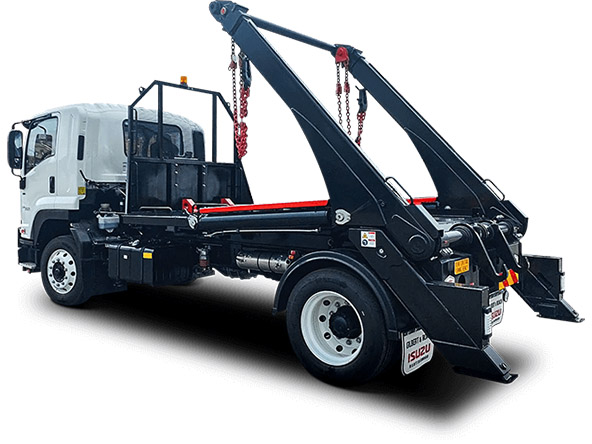
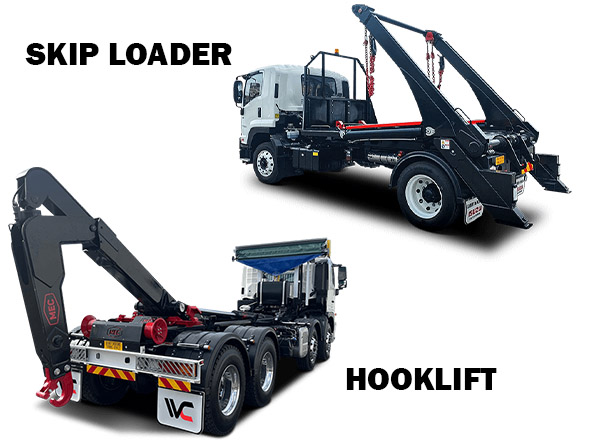
A skip loader is a truck fitted with hydraulic lifting arms used to pick up and drop off smaller skips (commonly 2m³ to 8m³). The arms lift the skip up and over the truck, placing it securely on the body for transport.
Skip loaders are common on:
- residential builds
- renovations
- small commercial jobs
- builders working in tight streets
They’re designed for fast servicing and high-frequency collections.
What is a Hooklift?
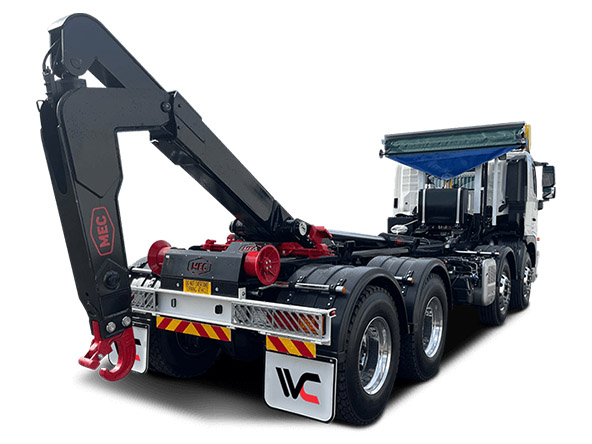
A hooklift truck uses a hydraulic hook arm to load/unload large bins and containers (typically 10m³ to 30m³+) using rails. Hooklifts are designed for high-volume waste and heavier materials like rubble and demolition waste.
Hooklifts are widely used for:
- construction and demolition projects
- infrastructure works
- commercial construction
- large industrial waste streams
They’re built for heavy loads, high capacity, and flexible container types.
Skip Loader vs Hooklift: Key Differences
Choosing the better system depends on your waste type, site access, collection frequency, and operational model.
Skip Loader Capacity
Skip bins are usually:
- 2m³
- 3m³
- 4m³
- 6m³
- 8m³
This works well for mixed waste or smaller volumes, but you may need more pickups.
Hooklift Capacity
Hooklift bins are typically:
- 10m³
- 12m³
- 15m³
- 20m³
- 30m³+
Ideal for high-volume sites or heavy waste streams (concrete, bricks, soil).
Skip Loader on Tight Sites
Skip loader trucks are generally smaller and easier to manoeuvre. They are better for:
- narrow driveways
- residential streets
- tight building sites
- inner-city jobs
This works well for mixed waste or smaller volumes, but you may need more pickups.


Hooklift Space Requirements
Hooklift trucks need:
- more room for deployment
- longer clearance to slide bins
- stable, flat ground
They’re ideal for:
- large site compounds
- industrial areas
- demolition zones
- projects with clear access
Load Type and Weight Handling
Construction waste varies massively and weight is where hooklift systems shine.
Skip Loader Limitations
Skip bins fill fast with heavy waste like:
- bricks
- rubble
- concrete
- soil
Overloaded skips create:
- safety risk
- spillage
- fines and failed pickups
- damage to trucks and lifting systems
Hooklift Strength
Hooklifts are built for heavy-duty waste and can handle:
- demolition waste
- scrap steel
- heavy rubble
- compacted loads
Pickup Frequency and Efficiency
Skip Loader Efficiency
The skip loader model works best when bins are swapped frequently and the service style is fast “drop-and-go.” It’s ideal for businesses that service multiple customers per day, particularly those focused on smaller collections, quick turnarounds, and tight urban routes.
Hooklift Efficiency
Hooklifts tend to be most efficient when bins stay on site for longer periods and the waste volume is higher. This system suits operators doing fewer pickups per day, but moving much larger loads each time. Because hooklifts handle greater tonnage per trip, they can reduce repeated transport runs, cut labour time per tonne, and minimise fleet wear caused by constant daily trips.
Best takeaway: Skip loaders help you complete more jobs per day, while hooklifts help you move more tonnes per trip.
Which Is Cheaper: Skip Loader or Hooklift?
There isn’t one universal answer to which system is cheaper, because the real cost depends heavily on your business model, the type of work you service, and the average tonnage you collect.
Upfront Equipment and Truck Costs
Skip loaders usually have a cheaper setup cost because the truck build is simpler, the hydraulic system is smaller, and the bins require less steel due to their smaller size. This makes skip loaders a practical option for operators entering the industry for the first time or expanding a fleet without excessive capital spend.
Hooklifts generally have higher upfront costs due to the heavier truck and hydraulic requirements. They often need a stronger chassis, and the larger bins are more expensive to manufacture. However, for businesses doing heavy-volume work, hooklifts can deliver a stronger return on investment over time.
Ongoing Operating Costs
Even though hooklifts may cost more upfront, they often reduce operating costs because they require fewer trips, allow better payload efficiency, and can generate stronger profit per run. They’re particularly effective when waste weight and volume are consistently high.
Skip loaders, on the other hand, can deliver strong daily turnover. They may use less fuel per trip, and route planning is often easier in metro areas where jobs are smaller and locations are closer together.
Bottom line: Skip loaders can be cheaper to run in the short term, but hooklifts can outperform long term when waste volume and weight increase.

Safety, Compliance, and Site Practicality
Waste transport is heavily regulated, and safety has a bigger impact on profitability than most operators expect. The more collections you perform, the more exposure you have to risks, compliance issues, and mechanical wear.
Skip loaders involve high-frequency lifting, which increases wear on equipment. Overloading can also be common, and because the number of jobs per day is higher, exposure to site hazards increases.
Hooklifts generally transport heavier loads, so operator training and site conditions matter more. Ground stability is important for safe loading and unloading, and while the system can provide stable load transport when secured correctly, mistakes can have more serious consequences due to the weight involved.
If you handle construction waste, bin selection should always prioritise stable ground placement, safe loading height, compliance with load limits, and correct signage and containment.
Best Choice by Construction Job Type
In residential construction waste, skip loaders are typically the best fit because sites often have limited space, waste volume is lower, cleanups occur more frequently, and bin swaps need to stay simple.
For renovations and small commercial builds, skip loaders are usually still the most practical option. They suit tighter access areas, offer flexible servicing, and provide more affordable bin options, especially when waste is moderate and turnaround times matter.
For demolition jobs, hooklifts are generally the better system because the waste is heavier and the volume is higher. Hooklifts allow fewer trips while carrying a higher payload per run, which improves efficiency and reduces transport churn.
For large commercial construction, hooklifts also tend to win out. Waste output is higher and timelines are longer, so sites can often dedicate space to compounds or bin zones, which makes hooklift servicing easier and more efficient.
For civil and infrastructure projects, hooklifts are usually the strongest choice again. These jobs often involve bulky waste, soil, rubble, large clear areas, and multi-bin logistics, all of which align well with hooklift strengths.

Skip Loader or Hooklift: Which One Is Better for Your Business?
If the real question is “which is better,” the answer depends on what type of operator you are and what your jobs look like.
A skip loader is usually the better option if your work involves smaller, fast-moving jobs. It suits residential work and metro access, works well when you’re collecting frequently, and keeps setup costs lower.
A hooklift is the better option if you’re targeting heavier loads and higher tonnage. It suits demolition and large-scale construction waste, delivers fewer trips with bigger returns, and aligns well with long-term contracts and sites that have compounds or dedicated waste zones.
Can You Run Both Skip Loader and Hooklift?
Yes — and many successful waste businesses do exactly that. A dual-model fleet allows skip loaders to handle high-frequency metro work while hooklifts cover large projects and demolition. This approach lets your business service more industries, reduces reliance on one waste type or job size, and improves stability as your customer base grows.
For many construction waste operators, expanding into hooklift becomes the natural next step once skip-loader routes become consistent and reliable.
How Wastecorp Equip Helps You Choose the Right System
At Wastecorp Equip, we supply equipment built for real waste operators — not showroom trucks. Whether you’re starting a skip bin business, upgrading to a hooklift setup, building a mixed fleet for construction waste, or sourcing heavy-duty bins, parts, or custom builds, we can help you choose the right system.
We support decisions based on your waste streams, service area, business model, and compliance requirements, so the equipment you invest in actually matches how you operate.
Conclusion
The Better Option Depends on Your Waste Volume and Site Type
There’s no “one best” system — only the system that best matches your jobs.
If your work is residential, tight access, and high-frequency servicing, skip loaders are usually the better option.
If your work involves demolition, heavy waste, large contracts, or high-volume sites, hooklifts are usually the stronger long-term performer.
If you want maximum flexibility, consider running both.

 Member of Waste Contractors and Recyclers Association of NSW.