

What Size Bin Do Councils Use for Green Waste Collection?
What Size Bin Do Councils Use for Green Waste Collection?
If you’ve ever looked at a council kerbside service and wondered, “What size is that green waste bin?” — you’re not alone. This is a common question for councils, contractors, developers, facility managers, and bin suppliers because bin size affects collection efficiency, truck compatibility, service costs, and even contamination rates.
In this guide, we’ll cover the most common green waste bin sizes used by councils, typical dimensions, lid colours, and what influences council decisions when choosing a standard bin size.
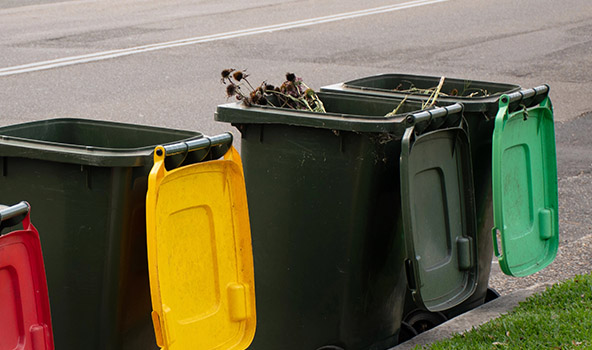
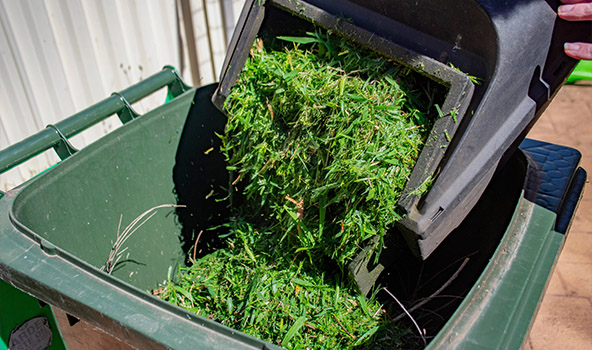
Standard Green Waste Bin Size Used by Councils (Australia)
Across Australia, the most common council green waste bin is the:
240L (240 litre) Mobile Garbage Bin (MGB)
This is the “standard household green bin” used in most kerbside green waste services. Councils favour 240L because it suits typical household garden waste volumes while still being manageable for collection vehicles and residents.
It also tends to offer the best balance between capacity and weight, especially once garden waste becomes wet and heavy.
Other Green Waste Bin Sizes Councils Use
While 240L is the standard in most areas, councils may choose different bin sizes depending on housing density, garden size, service frequency, and local waste volumes.
Standard Dimensions of Council Green Waste Bins
Councils usually specify bin capacity in litres, but dimensions still matter for suppliers, storage planning, and vehicle compatibility. Exact measurements vary slightly by manufacturer, but typical sizes are:
- Height: ~1,050 mm
- Width: ~580 mm
- Depth: ~730 mm
- Height: ~1,100 mm
- Width: ~620 mm
- Depth: ~880 mm
Most councils also require bins to meet AS 4123 (Australian Standard for Mobile Waste Containers) and suit standard lifters and collection equipment.
What Colour Bin Do Councils Use for Green Waste?
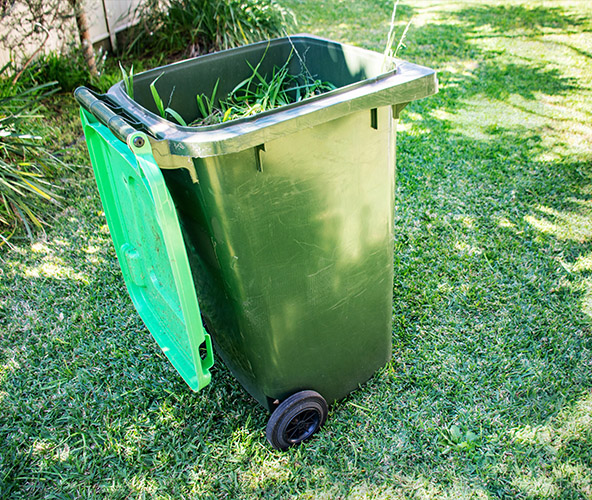
Green waste bin colours vary slightly by council, but the lid colour is usually the consistent indicator.
Most councils use one of the following:
- green lid / dark green body
- green lid / grey body
- green lid / black body
Some councils also use lime green lids or large contamination labels to improve sorting behaviour.
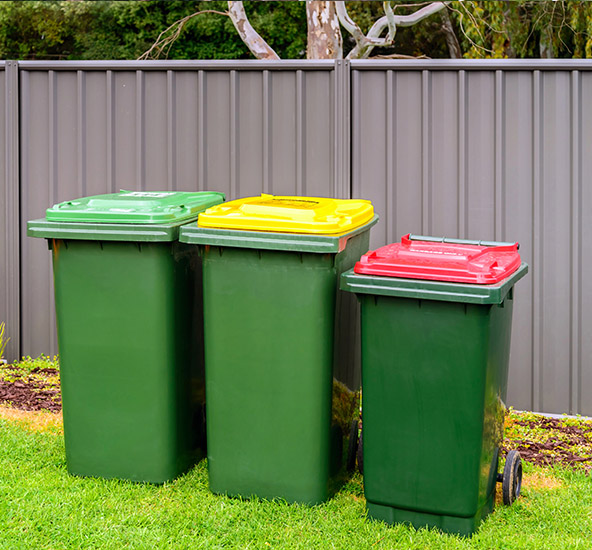
A common national-style colour system is:
- Red lid: general waste
- Yellow lid: recycling
- Green lid: garden organics or FOGO
Why Councils Choose Different Green Waste Bin Sizes
Councils don’t select bin sizes at random. The bin size affects collection logistics and resident behaviour, so councils weigh several factors when choosing a standard size.

Do Councils Use Bins Larger Than 360L for Green Waste?
For standard kerbside household services, generally no. The main household green waste bin sizes usually stop at 360L.
However, councils may use larger bins for non-kerbside green waste applications, such as parks and public facilities. These may include:
These are typically used for bulk green waste collection, not residential kerbside services.
Planning Bin Size for Council Contracts (Suppliers + Contractors)
If you’re supplying bins or tendering on council green waste contracts, bin size is only part of the requirement. Councils often specify additional standards such as:
- AS 4123 compliance
- UV-stable and impact-resistant plastic
- heavy-duty wheel and axle requirements
- hot-stamped serial numbers or barcode systems
- RFID tagging compatibility
- council logo printing or moulded branding
- lid colour matching across the fleet
- contamination labels / education decals
In other words, bin supply is just as much a compliance and logistics exercise as it is a product order.
Conclusion
Most Councils Use 240L Green Waste Bins
For most councils, the 240L MGB is the standard green waste bin for residential kerbside collection. However, many councils also use 120L and 360L bins depending on housing type, garden size, collection frequency, and vehicle limitations.
Bin size might look like a simple decision, but it has a major impact on service efficiency, contamination control, and overall operational cost.
FAQ’s
What is the standard green waste bin size in Australia?
Most councils use a 240L mobile garbage bin (MGB) as the standard green waste bin for kerbside collection.
Are green waste bins 240L or 360L?
Both are used. 240L is most common, while 360L is often used in leafy suburbs or larger block areas with high garden waste volumes.
What size is a council green waste bin in litres?
The most common council green waste bin sizes are:
- 120L
- 240L
- 360L
How big is a 240L green waste bin?
A typical 240L green waste bin is approximately:
- 1,050 mm high
- 580 mm wide
- 730 mm deep
Exact dimensions vary by manufacturer.
Why do councils use 240L bins for green waste?
Because 240L offers the best balance between capacity, manageable weight, kerbside storage practicality, and compatibility with collection vehicles.
Do councils provide a separate bin for green waste and food waste?
Some councils do. In FOGO programs (Food Organics + Garden Organics), the green bin may include both food and garden waste.
Can councils use hooklift bins for green waste?
Not for standard household kerbside collection. Hooklift bins are usually used for:
- parks maintenance
- bulk green waste drop-offs
- events and public areas

 Member of Waste Contractors and Recyclers Association of NSW.