
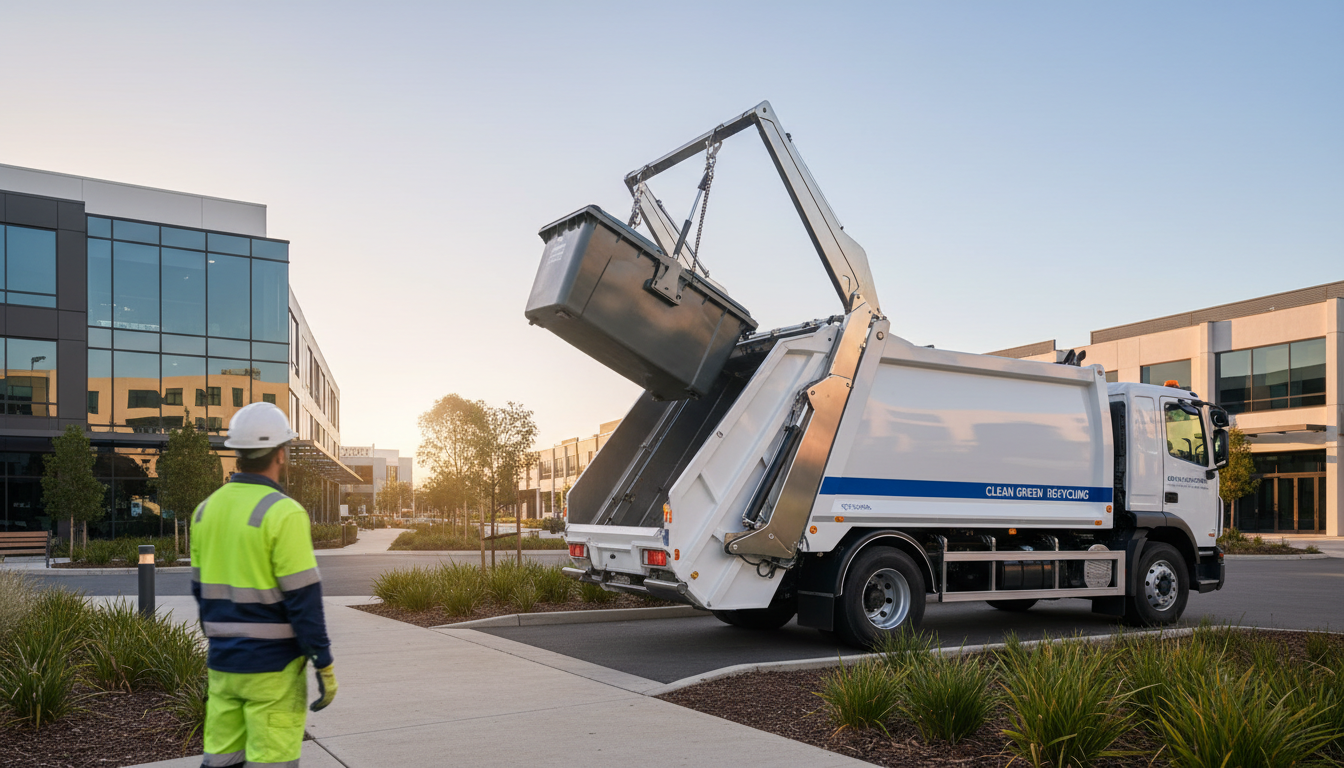
Selecting the best rear lift system Australia requires evaluating hydraulic performance, compaction efficiency, and compliance with Heavy Vehicle National Law mass limits enforced by the National Heavy Vehicle Regulator. Fleet managers and municipal procurement officers must assess rear lift compactors against operational requirements defined by the Protection of the Environment Operations Act 1997 (NSW) and National Waste Policy 2018 (Cth) framework, ensuring equipment delivers reliable performance across residential collection routes while maintaining AS 4024 safety of machinery standards. Wastecorp Equipment supplies OMB rear lift systems engineered for Australian waste operations, with full NHVR compliance documentation and WCRA member-backed technical support for fleet integration.
Rear lift compactors represent the dominant collection technology in Australian municipal fleets due to their efficiency in high-density residential applications and compatibility with standardised wheeled bin systems ranging from 120L household units to 1,100L commercial containers. Understanding the technical specifications that differentiate commercial-grade systems from entry-level equipment is essential for capital equipment investments that must deliver 10-15 years of operational service under demanding duty cycles.
What Defines a Rear Lift System in Australian Waste Collection
A rear lift system comprises a hydraulically actuated lifting mechanism mounted to the rear of a waste collection vehicle, designed to engage, elevate, and discharge wheeled bins into a compaction hopper. The system integrates three primary components: the lifting arm assembly with engagement forks or comb mechanisms, the hydraulic power unit delivering 180-250 bar operating pressure, and the compaction chamber with ejection blade assembly.
According to the Waste Management and Resource Recovery Association of Australia, rear lift compactors account for approximately 65% of kerbside collection vehicles in metropolitan council fleets due to their efficiency in residential route applications. This market dominance reflects the technology’s compatibility with Australian Standards bin dimensions and its ability to service multiple bin capacities without operator intervention beyond cab-mounted controls.
Industry Data
- —According to the Department of Climate Change, Energy, the Environment and Water (DCCEEW), Australia generated 75.8 million tonnes of waste in 2020-21, with municipal solid waste representing 13.6 million tonnes requiring collection infrastructure including rear lift compactors.
- —The National Heavy Vehicle Regulator (NHVR) specifies that waste collection vehicles must maintain axle mass limits of 6.0t (steer), 16.5t (drive), and 17.0t (tag) under Heavy Vehicle National Law, directly impacting rear lift system payload capacity design.
The lifting mechanism must accommodate standardised bin lifting lug dimensions while providing sufficient tipping height—typically 2,400mm to 3,200mm—to clear the hopper opening. Cycle time from bin engagement to discharge and return position ranges from 12 to 18 seconds depending on hydraulic flow rates and lifting arm geometry, directly impacting collection route productivity.
OMB Rear Lift Systems: European Engineering for Australian Conditions
OMB rear lift systems represent European engineering adapted for Australian heavy vehicle chassis configurations and operational conditions. As an official OMB distributor, Wastecorp Equipment supplies systems engineered to withstand high ambient temperatures, dust ingress, and extended duty cycles characteristic of Australian municipal collection routes.
OMB systems incorporate high tensile structural steel construction in critical load-bearing components, with hydraulic cylinders featuring hardened chrome-plated piston rods and polyurethane seals rated for extended service intervals. The lifting arm assembly utilises sealed pivot bearings and replaceable wear bushings to maintain alignment tolerances across 50,000+ lift cycles between major service interventions.
Compaction blade design incorporates multiple shear points to fracture bulky items and reduce void spaces, with blade edge profiles optimised for municipal solid waste composition including cardboard, plastics, and organic materials. The ejection system employs a full-width blade spanning the chamber cross-section to ensure complete discharge without material retention that can cause odour issues or contamination between collection streams.
Hydraulic System Performance and Reliability
Hydraulic system specification determines rear lift reliability and operational efficiency. Commercial systems operate at 180-250 bar working pressure, with load-sensing hydraulics adjusting flow rates based on bin weight and material resistance during compaction cycles. This pressure range provides sufficient force for lifting 1,100L bins loaded to 400kg capacity while maintaining cycle time efficiency.
The hydraulic power unit typically comprises a PTO-driven gear pump delivering 60-100 litres per minute flow capacity, with proportional control valves enabling smooth acceleration and deceleration of lifting and compaction functions. Pressure relief valves set at 10-15% above working pressure prevent overload conditions that can damage cylinders or structural components.
Implementing comprehensive hydraulic system maintenance protocols extends component service life and prevents operational failures. Critical maintenance intervals include hydraulic oil replacement at 2,000-hour intervals using ISO VG 46 anti-wear hydraulic fluid, cylinder seal inspection at 12-month intervals, and filter element replacement at 500-hour intervals to prevent contamination-related failures.
Notice:
Compaction Ratio and Payload Capacity Specifications
Compaction ratio defines the volume reduction achieved during the compression cycle, directly impacting collection efficiency and payload utilisation. Quality rear lift compactors achieve 3:1 to 5:1 compaction ratios for municipal solid waste, depending on material composition, moisture content, and compaction force applied.
A 3:1 compaction ratio indicates that three cubic metres of loose waste compresses to one cubic metre in the collection chamber, enabling a 16m³ hopper to accommodate approximately 48m³ of uncompacted material before requiring discharge. Higher compaction ratios reduce collection frequency and improve fleet utilisation across council routes, but require greater hydraulic force and structural reinforcement to withstand compaction pressures.
Payload capacity calculations must account for chassis gross vehicle mass ratings and axle load distribution to maintain NHVR compliance. A typical 6×4 rigid chassis with 26,000kg GVM provides approximately 10-12 tonnes payload capacity after deducting tare weight of chassis, cab, rear lift system, and hopper assembly.
NHVR Compliance and Heavy Vehicle Integration
Rear lift system selection must align with Heavy Vehicle National Law mass and dimension requirements administered by the National Heavy Vehicle Regulator. Chassis integration requires verification that the combined weight of rear lift mechanism, hopper assembly, and maximum payload does not exceed axle mass limits or gross combination mass ratings.
The NHVR specifies axle mass limits of 6.0 tonnes for steer axles, 16.5 tonnes for single drive axles, and 17.0 tonnes for tag axles on rigid trucks. Rear lift systems must be positioned to distribute payload weight across drive and tag axles without exceeding individual axle ratings or creating unsafe load distribution that affects vehicle stability during cornering or braking.
Understanding comprehensive waste collection truck procurement criteria ensures rear lift selection integrates with broader fleet acquisition strategy. Chassis wheelbase, rear overhang limitations, and PTO compatibility must be verified during specification development to prevent integration issues that delay commissioning or require costly modifications.
OMB rear lift systems supplied by Wastecorp Equipment include engineering documentation specifying mounting dimensions, centre of gravity calculations, and payload distribution data required for NHVR compliance verification. This documentation supports council procurement processes and ensures equipment meets regulatory obligations under Heavy Vehicle National Law before fleet deployment.
Bin Compatibility and Lifting Mechanism Design
Lifting mechanism design determines bin compatibility across the capacity range from 120L household bins to 1,100L commercial containers. Comb-style lifting mechanisms engage bin lifting lugs through vertical tines that slide beneath the lug profile, while fork-style mechanisms utilise horizontal arms that engage lugs from the side.
Comb mechanisms provide superior compatibility across multiple bin sizes without adjustment, accommodating variations in lug spacing and bin width. Fork mechanisms offer faster engagement cycles but may require manual positioning for bins outside standard dimensional tolerances. Fleet managers must evaluate bin inventory standardisation when selecting lifting mechanism configuration.
Bin construction materials affect lifting system loading and wear characteristics. Understanding structural steel specifications for waste bins ensures compatibility between rear lift systems and bin construction, particularly for commercial applications involving heavy materials or aggressive duty cycles that can damage inadequately specified containers.
Lifting lug reinforcement and bin body construction must withstand repeated lifting cycles without deformation or fatigue failure. High-density polyethylene bins require reinforced steel lifting lugs embedded in the moulding, while steel bins utilise welded lug assemblies integrated with the bin frame structure.
AS 4024 Safety Requirements for Rear Lift Operations
AS 4024 safety of machinery standards establish mandatory safety requirements for rear lift systems including emergency stop functionality, hydraulic interlock mechanisms, and operator visibility provisions. Compliance with these standards is not optional for commercial waste collection operations and forms part of workplace health and safety obligations under AS/NZS ISO 45001.
Emergency stop systems must be accessible from the operator position and capable of immediately halting all hydraulic functions including lifting, compaction, and ejection cycles. The system must require deliberate reset action before resuming operations to prevent accidental restart during maintenance or emergency response.
- ✓
Verify emergency stop functionality is accessible from operator position and halts all hydraulic functions immediately - ✓
Confirm hydraulic interlock prevents compaction cycle activation when hopper access doors are open - ✓
Ensure rear vision camera systems provide unobstructed view of lifting mechanism operation zone - ✓
Validate audible warning devices activate during lifting and compaction cycles to alert pedestrians - ✓
Confirm operator training documentation meets AS/NZS ISO 45001 requirements for equipment-specific competency
Hydraulic interlock systems prevent compaction cycle activation when hopper access doors or maintenance panels are open, eliminating crush hazards during servicing operations. Interlock switches must be fail-safe design, requiring positive engagement to enable hydraulic functions rather than relying on switch closure that can be defeated or fail in the open position.
Operator visibility requirements mandate rear vision camera systems providing unobstructed view of the lifting mechanism operation zone and bin engagement area. Camera systems must function in all lighting conditions and provide sufficient resolution to identify pedestrians or obstructions within the operational envelope.
Municipal Solid Waste Collection Requirements
Municipal solid waste collection operations under the Protection of the Environment Operations Act 1997 (NSW) impose specific requirements on rear lift system design including leachate containment, emission control, and material segregation capabilities. Councils must demonstrate compliance with waste tracking and reporting obligations that affect equipment specification.
The National Environment Protection (Used Packaging Materials) Measure establishes recovery targets for recyclable materials including paper, cardboard, plastics, glass, and metals. Rear lift systems designated for recyclable material collection require modified hopper designs that minimise compaction force to prevent contamination and maintain material quality for reprocessing facilities.
Reviewing municipal bin sizing standards provides context for rear lift capacity requirements across different waste streams. Green waste collection typically utilises 240L bins serviced weekly or fortnightly, while residual waste collection may employ 120L or 240L bins depending on council policy and waste minimisation targets.
Leachate containment systems must prevent liquid waste discharge during collection and transport operations. Hopper floor design incorporates drainage channels directing leachate to a sealed sump with capacity sufficient for a full collection route without overflow. Discharge valves enable controlled emptying at approved disposal facilities.
Rear Lift Systems vs Alternative Collection Technologies
Rear lift systems compete with front lift, side lift, and hook lift technologies across different waste collection applications. Understanding the operational advantages and limitations of each technology guides appropriate equipment selection for specific route characteristics and material types.
Front lift systems accommodate larger commercial bins from 1.5m³ to 8m³ capacity, making them suitable for commercial and industrial collection routes with lower stop density. The lifting mechanism mounted forward of the cab provides superior operator visibility but requires greater chassis length and turning radius compared to rear lift configurations.
Side lift systems enable single-operator collection with automated bin engagement from the driver position, reducing labour costs but limiting operational flexibility in narrow streets or areas with parking obstructions. Side lift mechanisms require precise bin placement within a narrow engagement zone, making them less suitable for irregular collection points.
Evaluating the comparison of alternative lifting systems demonstrates when rear lift is the optimal choice versus skip loaders or hooklifts for specific applications. Construction and demolition waste collection typically favours hook lift systems that accommodate interchangeable containers from 10m³ to 40m³ capacity without compaction requirements.
- 01Assess route density and stop frequencyHigh-density residential routes with 800-1,200 stops per shift favour rear lift efficiency, while low-density commercial routes may justify front lift or hook lift alternatives.
- 02Evaluate bin standardisation across service areaRear lift systems require standardised wheeled bins with compatible lifting lugs, while hook lift systems accommodate diverse container types without modification.
- 03Calculate labour requirements and crew configurationRear lift operations typically employ two-person crews, while side lift systems enable single-operator collection with lower labour costs but reduced operational flexibility.
- 04Verify infrastructure compatibility at depot and disposal facilitiesRear lift systems require adequate overhead clearance at tipping locations, typically 4.5-5.0 metres including vehicle height and hopper elevation during discharge.
Total Cost of Ownership: Acquisition, Maintenance, and Lifecycle
Total cost of ownership analysis extends beyond initial capital expenditure to encompass maintenance costs, component replacement intervals, and operational efficiency over the equipment’s 10-15 year service life. Fleet managers must evaluate lifecycle costs when comparing rear lift systems from different manufacturers.
Hydraulic component serviceability significantly impacts maintenance costs. Systems utilising standardised cylinder designs with readily available seal kits reduce downtime and parts inventory requirements compared to proprietary components requiring manufacturer-specific parts with extended lead times. Cylinder bore diameter, rod diameter, and stroke length should align with common industrial standards where possible.
Wear part replacement intervals affect operational costs across the fleet lifecycle. Compaction blade edges typically require replacement at 12-18 month intervals depending on material composition and duty cycle intensity. Lifting mechanism pivot bushings and wear pads require inspection at 6-month intervals with replacement at 24-36 months based on wear measurements.
Fuel consumption varies based on hydraulic system efficiency and PTO engagement duration. Systems incorporating load-sensing hydraulics and variable displacement pumps reduce parasitic losses compared to fixed displacement pumps operating at constant pressure. Fuel consumption differences of 2-4 litres per 100km compound significantly across annual fleet operations.
- ✓
Calculate total cost of ownership including acquisition, maintenance, fuel consumption, and residual value over 10-15 year lifecycle - ✓
Verify availability of wear parts including compaction blade edges, hydraulic seals, and lifting mechanism bushings from local suppliers - ✓
Assess hydraulic system efficiency and fuel consumption impact across annual operating hours and route distances - ✓
Evaluate manufacturer warranty coverage including hydraulic components, structural steel, and electrical systems - ✓
Confirm technical support availability including engineering assistance for chassis integration and NHVR compliance documentation - ✓
Review residual value projections based on equipment condition, maintenance history, and market demand for used rear lift systems
Operator training costs represent an often-overlooked lifecycle expense. Systems with intuitive controls and standardised operating procedures reduce training time for new operators and minimise operational errors that can damage equipment or create safety incidents. Training documentation compliant with AS/NZS ISO 45001 requirements supports workplace health and safety obligations while reducing liability exposure.
Frequently Asked Questions
What compaction ratio should I expect from a rear lift compactor for municipal solid waste?
Quality rear lift compactors achieve 3:1 to 5:1 compaction ratios for municipal solid waste, depending on material composition and moisture content. Systems must comply with AS 4024 safety interlocks during compaction cycles. Higher ratios reduce collection frequency and improve fleet utilisation across council routes.
Are OMB rear lift systems compliant with NHVR mass and dimension requirements?
OMB rear lift systems are engineered to integrate with Australian heavy vehicle chassis while maintaining compliance with Heavy Vehicle National Law mass limits and axle load distribution requirements. Wastecorp Equipment specifies systems with payload capacity calculations verified against National Heavy Vehicle Regulator standards for each chassis configuration.
What hydraulic pressure rating is required for reliable rear lift operation?
Commercial rear lift systems typically operate at 180-250 bar hydraulic pressure for consistent lifting performance across 1.5m³ to 12m³ bin capacities. Systems must incorporate pressure relief valves and load-sensing hydraulics to prevent overload conditions and ensure compliance with AS/NZS ISO 45001 operational safety requirements.
How does bin tipping height affect rear lift system selection?
Tipping height ranges from 2,400mm to 3,200mm depending on compactor hopper design and chassis height. Fleet managers must verify clearance compatibility with depot infrastructure and overhead obstructions. Higher tipping points may require additional structural reinforcement to maintain stability during discharge cycles.
Wastecorp Equipment supplies OMB rear lift systems engineered for Australian waste operations, with full NHVR compliance documentation and WCRA member-backed technical support. Contact our St Marys engineering team for payload calculations and chassis integration specifications tailored to your fleet requirements.
Official distributor for MEC and OMB. Member of the Waste Contractors and Recyclers Association of NSW.

 Member of Waste Contractors and Recyclers Association of NSW.