
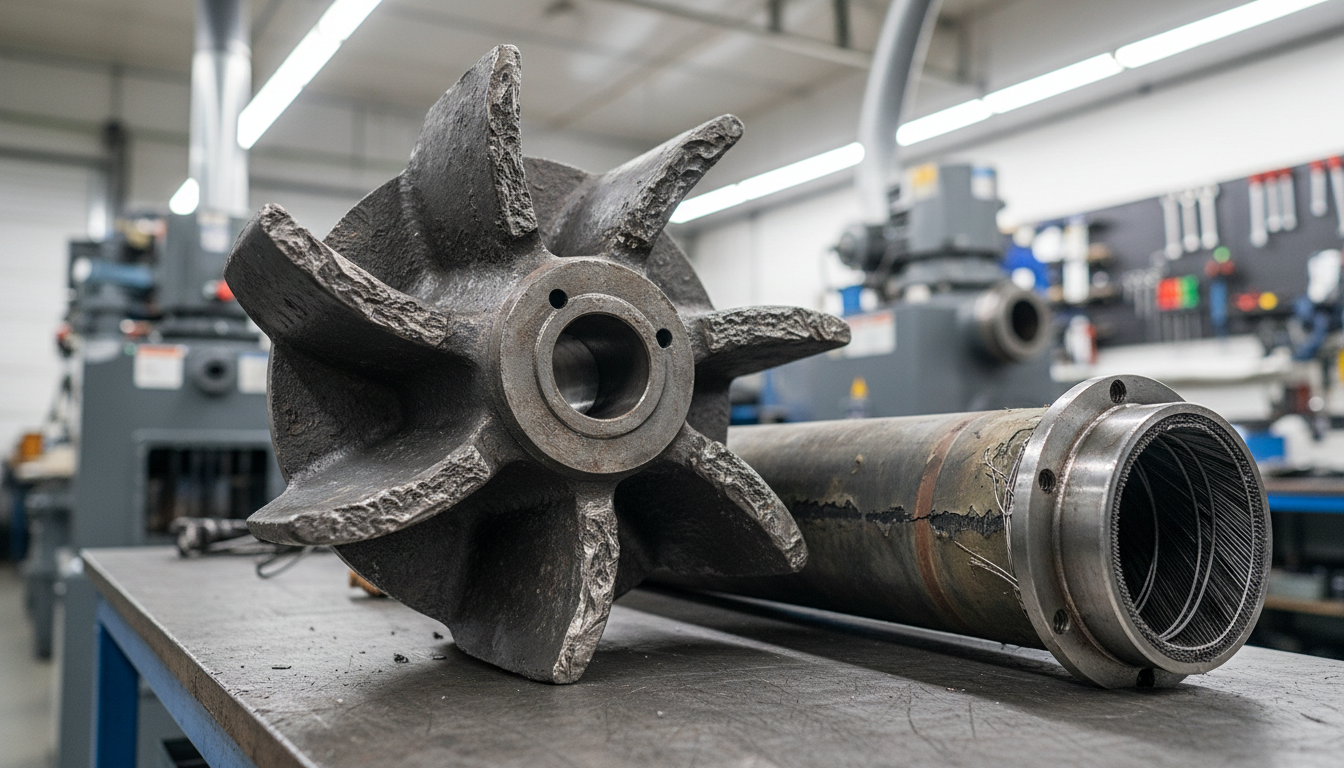
Hydraulic component failures in MEC equipment Australia fleets result in costly downtime, missed collection schedules, and compounding maintenance backlogs. For fleet managers operating MEC skip loaders, recycling cranes, and trailers under the demanding conditions typical of NSW municipal contracts and commercial waste operations, understanding wear component identification and replacement thresholds is essential to maintaining operational availability and compliance with AS 4024.1 safety of machinery maintenance requirements.
According to the Waste Management and Resource Recovery Association of Australia (WMRR), hydraulic system failures account for 34% of unscheduled downtime in waste collection fleets, with seal degradation the primary failure mode. The Australian Bureau of Statistics reports that the waste services industry operated 4,847 heavy vehicles in 2022-23, with hydraulic component replacement representing 18-22% of annual maintenance expenditure across municipal and commercial fleets. These figures underscore the financial and operational imperative for proactive wear part management in MEC equipment deployed across Australian operations.
Industry Data
- —According to the Waste Management and Resource Recovery Association of Australia (WMRR), hydraulic system failures account for 34% of unscheduled downtime in waste collection fleets, with seal degradation the primary failure mode
- —The Australian Bureau of Statistics reports that the waste services industry operated 4,847 heavy vehicles in 2022-23, with hydraulic component replacement representing 18-22% of annual maintenance expenditure across municipal and commercial fleets
As the official Australian distributor for MEC and a member of the Waste Contractors and Recyclers Association of NSW (WCRA), Wastecorp Equipment maintains comprehensive technical documentation and parts inventory to support predictive maintenance programs across our customer base. This technical guide addresses wear component identification, inspection protocols compliant with AS 4024.1 and AS 4041 hydraulic hose assembly standards, and replacement intervals calibrated to Australian operating conditions.
Hydraulic Cylinder Seals and Rod Assemblies in MEC Skip Loaders
Hydraulic cylinder seals in MEC skip loader hydraulic architecture operate under severe duty cycles, with hoist cylinders experiencing peak pressures of 250-280 bar during loaded lifting operations and rod seals subjected to contamination from airborne particulate common in construction and demolition waste handling. Seal material selection directly influences service life: nitrile (NBR) seals rated to 80 Shore A durometer provide adequate performance in standard municipal waste applications with operating temperatures below 90°C, while polyurethane (PU) seals offer superior abrasion resistance in high-cycle skip handling operations exceeding 15-20 lifts per day.
Fluorocarbon (FKM) seals become necessary where equipment operates near sensitive waterways requiring biodegradable HETG hydraulic fluids under Protection of the Environment Operations Act 1997 (NSW) environmental management guidelines, as ester-based fluids degrade NBR compounds within 12-18 months. Visual inspection protocols per AS 4024.1 require quarterly assessment of rod chrome plating for scoring or pitting exceeding 0.1mm depth, and immediate cylinder replacement when rod seal leakage exceeds 5mL per 100 operating cycles, measured via drip pan collection during stationary testing.
Replacement intervals for MEC skip loader hoist cylinder seal kits typically fall within 3,000-5,000 operating cycles under standard duty, with accelerated wear in high-temperature regional NSW and Queensland operations where ambient temperatures exceed 35°C for extended periods. Rod assemblies require replacement when chrome plating wear exceeds manufacturer tolerances of 0.05mm measured via micrometer at multiple points along the stroke length, or when visible scoring compromises seal contact surfaces regardless of measured wear depth.
Hydraulic Pump Wear Indicators and Replacement Thresholds
Gear pumps and piston pumps in MEC equipment exhibit distinct wear patterns requiring different diagnostic approaches. Gear pumps operating at 180-220 bar nominal pressure show volumetric efficiency degradation as internal clearances increase beyond design tolerances of 0.015-0.025mm between gear teeth and housing. Measurable indicators include increased hydraulic fluid operating temperature above 70°C under normal load, reduced cycle speed exceeding 15% of baseline performance, and elevated system noise levels indicating cavitation from insufficient flow delivery.
Piston pump wear manifests through bearing degradation in the swashplate assembly and cylinder barrel scoring from inadequate lubrication, typically resulting from hydraulic fluid contamination protocols not maintaining ISO 4406 18/16/13 cleanliness standards. Particle contamination above 21/19/16 accelerates wear exponentially, reducing pump service life from the typical 8,000-10,000 operating hours to 3,000-4,000 hours in dusty environments common to waste transfer stations and recycling facilities.
Replacement thresholds for MEC hydraulic pumps should be triggered when flow output measured via flow meter testing falls below 90% of rated capacity at nominal pressure, when case drain flow exceeds 3% of pump displacement indicating internal leakage past worn sealing surfaces, or when fluid analysis reveals ferrous particle counts above 500 particles per 100mL in the 5-15 micron range. Proactive replacement at these thresholds prevents catastrophic failure and secondary damage to downstream control valves and actuators.
Slew Ring Bearings in MEC Recycling Cranes
Slew ring bearings in MEC crane slew bearing specifications represent critical wear components subject to combined axial, radial, and moment loading during scrap handling and material sorting operations. Four-point contact ball bearings commonly specified in MEC recycling cranes require quarterly inspection measuring radial play against manufacturer tolerances typically specified at 0.3-0.5mm maximum, with replacement mandatory when play exceeds 0.8mm or when rotational resistance increases beyond baseline torque measurements by more than 25%.
External gear teeth on slew ring assemblies require visual inspection for pitting, spalling, or tooth wear exceeding 10% of original tooth height, measured via gear tooth caliper at multiple points around the ring circumference. Lubrication intervals per AS 4024.1 machinery safety maintenance schedules typically specify greasing every 100 operating hours or monthly intervals, whichever occurs first, using NLGI Grade 2 lithium complex grease with EP additives suitable for boundary lubrication conditions under shock loading.
Bearing raceway inspection requires annual removal of raceway covers to assess ball track condition, with replacement necessary when visible pitting exceeds 2mm diameter or when Brinell hardness testing indicates surface hardness degradation below HRC 58 from the original HRC 60-62 specification. Slew bearing replacement intervals in MEC recycling cranes operating in scrap metal applications typically range from 6,000-8,000 operating hours under standard duty cycles, with reduced intervals in high-tonnage operations exceeding 15 tonnes lifting capacity where moment loading accelerates raceway wear.
Wear Pads and Guide Rollers in Hook Lift Systems
UHMW polyethylene wear pads in MEC hook lift systems provide the sliding interface between hook assembly and container rails, with replacement thresholds defined by remaining material thickness measured at the highest wear points. Original wear pad thickness typically specified at 20-25mm requires replacement when remaining thickness falls below 8mm, representing approximately 60-65% material loss, to maintain adequate structural support and prevent metal-to-metal contact that accelerates hook arm wear.
Guide rollers mounted on the hook assembly and subframe require inspection for bearing play exceeding 0.5mm radial movement and surface wear creating flat spots or diameter reduction beyond 5% of original roller diameter. Polyurethane roller surfaces rated to 95 Shore A durometer provide superior load distribution compared to steel rollers, but require replacement when durometer testing indicates surface hardness degradation below 85 Shore A or when visible cracking appears in the polyurethane bonding interface.
Inspection intervals per AS 4024.1 should occur every 500 operating cycles or quarterly, whichever occurs first, with particular attention to asymmetric wear patterns indicating misalignment between hook assembly and container interface. Wastecorp Equipment maintains complete wear pad and roller assemblies for MEC hook lift systems, with replacement kits including all fastening hardware and installation torque specifications to ensure proper load distribution across mounting points.
Trailer Suspension Bushings and Pivot Points
Suspension bushings in MEC trailer suspension and axle configurations experience accelerated wear under the dynamic loading conditions typical of waste transport operations, where payload mass variations and road surface irregularities create cyclic stress patterns. Polyurethane bushings rated to 80-85 Shore A durometer provide superior wear resistance compared to rubber compounds, with replacement intervals extending from 24-36 months for rubber to 48-60 months for polyurethane under equivalent duty cycles.
Visual inspection protocols require assessment of bushing compression set, measured as permanent deformation exceeding 15% of original bushing height, and radial cracking visible at the bushing outer diameter indicating material fatigue. Pivot point wear at spring hangers and equaliser beams should be measured using dial indicators to assess pin-to-bushing clearance, with replacement necessary when clearance exceeds 1.5mm or when visible elongation of bushing bore indicates wear beyond design tolerances.
National Heavy Vehicle Regulator (NHVR) compliance requirements under the Heavy Vehicle National Law (HVNL) mandate that suspension components maintain structural integrity and load distribution characteristics consistent with the vehicle’s certified mass ratings. Worn suspension bushings that alter axle alignment or load sharing between axle groups can result in non-compliance with mass distribution requirements, creating legal liability under HVNL enforcement provisions. Quarterly inspection intervals align with standard preventive maintenance schedules and provide adequate monitoring frequency to identify wear progression before compliance thresholds are exceeded.
Hydraulic Hose Assemblies: Inspection Standards and Replacement
Hydraulic hose assemblies in MEC equipment operate under demanding conditions combining high pressure, temperature cycling, and exposure to abrasive environments. AS 4041 hydraulic hose assembly standards specify inspection criteria including surface condition assessment, dimensional verification, and pressure testing protocols. High-pressure hoses rated to 350 bar working pressure with 4:1 safety factors provide 1,400 bar minimum burst pressure, but service life degrades through multiple failure mechanisms including wire reinforcement fatigue, cover abrasion, and coupling crimp degradation.
Visual inspection criteria per AS 4041 include immediate replacement when surface cracking penetrates the outer cover layer, when hose diameter swell exceeds 10% of nominal outside diameter indicating internal wire strand failure, or when cover abrasion exposes wire reinforcement layers. Coupling inspection requires verification that crimp ferrules show no axial movement relative to hose body and that threaded connections maintain proper engagement depth without cross-threading or galling visible on thread surfaces.
Industry best practice for MEC equipment hydraulic hoses establishes replacement intervals of 5-7 years regardless of visual condition, as internal degradation of elastomer compounds and wire reinforcement fatigue occur independent of external appearance. Hoses subjected to high-flexing applications such as crane boom extensions or articulated hook lift assemblies require reduced intervals of 3-5 years due to accelerated fatigue accumulation. Replacement hose assemblies must meet original equipment specifications for pressure rating, temperature range, and fluid compatibility, with particular attention to seal material compatibility when biodegradable hydraulic fluids are specified for environmental compliance.
Control Valve Spools and Proportional Flow Components
Directional control valve spools in MEC hydraulic systems operate with precision clearances of 0.005-0.010mm between spool lands and valve body bore, providing controlled internal leakage necessary for spool centering and pressure balancing. Wear mechanisms include abrasive particle damage from inadequate filtration, corrosion from water contamination, and adhesive wear from boundary lubrication conditions during low-speed spool movement. Valve performance degradation manifests as increased internal leakage reducing actuator speed, imprecise positioning from excessive spool-to-bore clearance, and complete functional failure when particulate contamination creates spool seizure.
Proportional flow control valves incorporating electronic feedback and pressure compensation require additional diagnostic attention to solenoid coil resistance, measured via multimeter testing against manufacturer specifications typically ranging from 8-15 ohms depending on coil design. Solenoid plunger wear creates increased air gap and reduced magnetic force, requiring higher current input to achieve equivalent flow control. Replacement becomes necessary when coil resistance deviates beyond 10% of specification or when flow control linearity testing reveals hysteresis exceeding 5% of full-scale flow range.
Valve cartridge replacement in MEC equipment typically occurs at 6,000-8,000 operating hours under clean hydraulic fluid conditions maintaining ISO 4406 18/16/13 or better cleanliness levels. Contaminated systems operating at 21/19/16 or worse reduce valve service life to 2,000-3,000 hours, emphasising the critical importance of filtration system maintenance and fluid sampling protocols. Wastecorp Equipment provides complete valve assemblies and individual cartridge components for MEC hydraulic systems, with technical support available to diagnose performance issues and specify appropriate replacement components based on failure mode analysis.
Establishing Replacement Intervals for Your Fleet
Effective wear component management requires systematic tracking of operating hours, cycle counts, and failure modes across fleet assets to establish statistically valid replacement intervals calibrated to actual operating conditions. Preventive maintenance scheduling frameworks should incorporate both time-based and condition-based triggers, with replacement decisions informed by inspection data rather than arbitrary calendar intervals.
Fleet managers should establish baseline performance metrics for critical components including hydraulic cylinder cycle times, pump flow output at specified pressure, and slew bearing rotational torque. Quarterly measurement of these parameters against baseline values provides early indication of wear progression, allowing scheduled replacement during planned maintenance windows rather than reactive repairs following component failure. Documentation of replacement intervals and failure modes across multiple units enables refinement of maintenance schedules specific to operational duty cycles, environmental conditions, and payload characteristics.
AS 4024.1 safety of machinery maintenance requirements mandate that operators establish and document maintenance procedures adequate to maintain equipment in safe operating condition throughout its service life. For MEC equipment operating in waste collection applications, this necessitates formal inspection protocols, documented measurement data, and clear replacement criteria based on measurable wear thresholds rather than subjective assessment. Integration of wear component tracking into computerised maintenance management systems enables trend analysis and predictive replacement scheduling that minimises both unscheduled downtime and premature component replacement.
Parts Availability and Lead Times for MEC Components in Australia
As the official Australian distributor for MEC, Wastecorp Equipment maintains comprehensive parts inventory at our St Marys facility in Western Sydney, with hydraulic components, wear assemblies, and genuine replacement parts available for next-day dispatch across NSW and interstate delivery within 48-72 hours. Strategic inventory management of high-turnover wear components including hydraulic cylinder seal kits, wear pads, and hose assemblies ensures minimal downtime for customer fleets operating under demanding collection schedules.
Parts procurement strategies should consider parts availability and aftermarket support criteria as critical factors in lifecycle cost analysis. Equipment platforms with established Australian distribution networks and local parts inventory provide significantly lower total cost of ownership compared to systems requiring international freight for routine wear components. Lead times for specialised components such as slew ring bearings and hydraulic pumps typically range from 4-6 weeks when not held in local inventory, necessitating proactive ordering based on predictive maintenance schedules rather than reactive procurement following component failure.
Technical support for parts identification and specification verification is available through Wastecorp Equipment’s engineering team, with equipment serial number cross-referencing ensuring correct component selection for specific model years and configuration variants. Our membership in the Waste Contractors and Recyclers Association of NSW (WCRA) provides additional industry networking resources for fleet managers seeking operational insights and maintenance best practices from peer organisations operating similar MEC equipment configurations.
Frequently Asked Questions
What is the typical service life of hydraulic cylinder seals in MEC skip loaders under Australian operating conditions?
Hydraulic cylinder seals in MEC skip loaders typically require replacement every 3,000-5,000 operating cycles or 18-24 months under standard municipal waste collection duty. Accelerated wear occurs in high-temperature environments above 35°C or where hydraulic fluid contamination exceeds ISO 4406 18/16/13 cleanliness standards, common in dusty regional NSW and Queensland operations. Seal material selection significantly influences service life, with polyurethane seals offering superior abrasion resistance compared to standard nitrile compounds in high-cycle applications. Fluorocarbon seals become necessary when biodegradable HETG hydraulic fluids are specified for environmental compliance under Protection of the Environment Operations Act 1997 (NSW), as ester-based fluids degrade nitrile compounds within 12-18 months.
How do I identify wear in MEC crane slew ring bearings before catastrophic failure?
Slew ring bearing wear in MEC recycling cranes manifests as increased rotational resistance, audible grinding during slew operations, or visible gear tooth wear on the ring gear. Conduct quarterly inspections measuring radial and axial play against manufacturer tolerances (typically less than 0.5mm radial play), and monitor grease purge intervals as specified in AS 4024.1 machinery safety maintenance schedules. Excessive play beyond 0.8mm radial movement or rotational torque increases exceeding 25% of baseline measurements indicate advanced wear requiring immediate replacement. External gear teeth should be inspected for pitting, spalling, or tooth height reduction exceeding 10% of original dimensions, measured at multiple points around the ring circumference. Annual raceway inspection requiring removal of raceway covers allows direct assessment of ball track condition, with replacement necessary when pitting exceeds 2mm diameter or when surface hardness testing indicates degradation below HRC 58.
Are MEC hydraulic components compatible with biodegradable hydraulic fluids required under NSW EPA guidelines?
MEC hydraulic systems manufactured post-2015 are compatible with HETG (hydraulic environmental triglyceride) biodegradable fluids meeting ISO 15380 specifications, increasingly mandated for equipment operating near waterways under Protection of the Environment Operations Act 1997 (NSW). Seal materials must be verified as compatible with ester-based fluids to prevent premature degradation; consult equipment serial number-specific technical bulletins. Standard nitrile seals degrade rapidly in biodegradable fluids, requiring replacement with fluorocarbon or hydrogenated nitrile compounds rated for ester fluid compatibility. Hydraulic hose assemblies must similarly be specified with inner tube materials compatible with biodegradable fluids, as standard petroleum-based hose compounds exhibit accelerated degradation when exposed to HETG fluids. Wastecorp Equipment provides technical guidance on seal material selection and fluid conversion procedures for MEC equipment transitioning to biodegradable hydraulic fluids to meet environmental compliance requirements.
What replacement interval should I schedule for hydraulic hoses on MEC equipment to maintain NHVR compliance?
The National Heavy Vehicle Regulator requires hydraulic brake and steering systems to meet ADR 38/05 and ADR 35/05 standards, but does not mandate specific replacement intervals for auxiliary hydraulic systems. Industry best practice for MEC equipment hydraulic hoses is replacement every 5-7 years regardless of visual condition, or immediately upon detection of surface cracking, abrasion, or hose swell exceeding 10% of nominal diameter per AS 4041 hose assembly standards. Hoses subjected to high-flexing applications such as crane boom extensions require reduced intervals of 3-5 years due to accelerated wire reinforcement fatigue. While NHVR does not directly regulate auxiliary hydraulic system maintenance intervals, operators remain responsible under Heavy Vehicle National Law (HVNL) for ensuring equipment maintains safe operating condition and does not create environmental hazards through hydraulic fluid leakage. Documentation of hose inspection and replacement intervals provides evidence of due diligence in maintaining equipment safety and environmental compliance under both HVNL and Protection of the Environment Operations Act 1997 (NSW) requirements.
Wastecorp Equipment maintains comprehensive MEC parts inventory at our St Marys facility, with hydraulic components, wear assemblies, and genuine replacement parts available for next-day dispatch across NSW and interstate delivery within 48-72 hours.
Official distributor for MEC and OMB. Member of the Waste Contractors and Recyclers Association of NSW.

 Member of Waste Contractors and Recyclers Association of NSW.